Monday, September 5, 2016

Ruby-throats in the Yard

And just like that, summer is over. I spent it immersed in ruby-throated hummingbird banding. Several of my weekends I headed north to Rusk and Washburn counties in northwestern Wisconsin where I power banded 2-3 days, banding 3-4 hours a stretch in the mornings and early evenings, Friday night through Sunday morning. When I wasn't banding I was replenishing my band supply, hand-snipping and forming each band. 

From mid-June to late August, I banded over 800 ruby-throated hummingbirds in Wisconsin (mostly) and Michigan! 
Ruby-throated Hummingbird, HY male on Royal Catchfly
The hummingbird banding season is now winding down. During the past week, I've finally had the chance to admire the few ruby-throats residing in my own backyard. Fall migration is upon us. Outside of my own backyard I've not witnessed much of it, which is entirely fine by me (finally shedding my birder identity?).

Ruby-throated Hummingbird, HY (hatch year) male patrolling his territory
I've found the hatch year (HY) ruby-throats to be more confiding and curious than the adults. Capturing images of the young hummingbirds is fairly easy compared to the wary adults. I still have an adult male visiting my yard inconsistently, but his visits are brief and rarely involve nectaring at my flowers. He has not been cooperative for photos. It has been my challenge to capture a decent image of an adult male ruby-throated hummingbird. Perhaps one of these years.

HY Ruby-throated Humming visiting Red Alert Phygelius hybrid
Ruby-throated Hummingbird, HY male visiting  Red Alert Phygelius hybrid
Last November I was gifted some Royal Catchfly plants by the hosts of the first rufous hummingbird I banded in Wisconsin. Up until a two weeks ago, I had written off the plants as not having survived being planted so late in the season in last year. To my delight I discovered all three plants hidden and blooming among some of my other perennials that were crowding out this favored hummingbird plant. The hummingbirds immediately took to the blooms upon my day-lighting them.
Ruby-throated Hummingbird HY male at Royal Catchfly

While patiently staking out my hummingbird plants for photos of nectaring hummingbirds, this Cape May Warbler paid a visit. My first fall migrant of the season! Despite having a small urban backyard, migrating Cape May warblers seem to be a regular visitor annually. 
Cape May Warbler
Cape May Warbler
Black and Blue Salvia is another top tier favorite plant for the hummingbirds and their host gardeners.


This Dropmore Scarlet Honeysuckle is a recent addition to my garden. I picked it up at the impressive Northern Exposure Greenhouse and Garden Center in Boulder Junction en route home from hummingbird banding a few weekends ago. It was an instant hit with the hatch year ruby-throats.


They had not been visiting my lantana flowers until I moved the plant from the ground to a stand four feet off the ground. By simply elevating this potted plant, the hummers began visiting it regularly.


Certain Mondarda species such as this Wendy's Wish serve as magnets for nectaring hummingbirds. Unfortunately the native species that grows in Wisconsin's prairies is not a flower the hummingbirds will frequent.
Wendy's Wish Monarda species
By month's end, my resident Ruby-throated hummingbirds will depart for their wintering grounds in Central America. It's been a whirlwind but fun season despite the little time I've had in my yard to enjoy them. I hope to capture some more moments with these delightful creatures before they leave.

King of the planter!
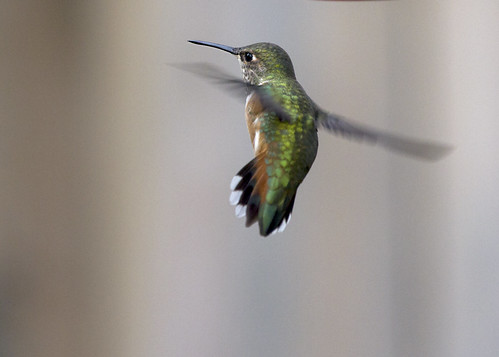
Their departure will usher in the exciting season of "winter hummingbirds" when rufous and Anna's hummingbirds migrate through Wisconsin. Fall is also the time for vagrant hummingbirds to appear! Will this year yield another Mexican violetear (formerly known as the green violetear) or perhaps a first record blue-throated hummingbird for Wisconsin? I'll be keeping my feeders cleaned and filled and the yard littered with red magnets in hopes of attracting one of Wisconsin's rare hummingbirds! It was not too long ago, October of 2014, that I was fortunate to attract this female rufous hummingbird to my yard. The way time is moving and circumstances have changed, that seems like a life time ago... I'm looking forward to what the future and changing seasons will bring!

Flight shot showing the diagnostic R2 for female Rufous
Rufous Hummingbird, female, my yard October 2014

Sunday, August 14, 2016

Spring Green Preserve 7August2016

It's been one week since I visited Spring Green Preserve. The task of photo editing has fallen to the wayside... BUT I resolve not to allow another series of photos lay to waste in the digital darkness of my home drive!

Monarda punctata
Spring Green Preserve, I had not been there all of July. It was time to visit. I was badly in need of a good cardio workout climbing to the top of the bluff not to mention there are always some interesting critters and plants to see along the way. I also figured I had a shot at seeing a Blue Grosbeak since they've been reported breeding here this summer. So I packed my carryout lunch from the Spring Green General Store and was off. My plan was lunch at the top.

Three to four hours later, beyond the robberflies, Punctured Tiger Beetles and Blue Grosbeak, I finally reached the top of the bluff where I ate a very late lunch. That's just how it goes when you visit this place. There's lots of the whimsical distractions to investigate en route to the bluff top.

The desert was predominantly blooming with Monarda punctata (aka. Spotted beebalm, Spotted horsemint) and what I believe was False Sunflower. It's hard to feel compelled to photograph flowers that are my least favorite color, yellow. Thus I can't be certain of ID since I didn't investigate these banal yellow plants.

Monarda punctata
On the insect front, Punctured Tiger Beetles (Cicindela punctulata) were numerous along the entire prairie trail. Punctata and Punctulata...my brain paired these similar terms wondering if the "Puncs" often peak together.

Punctured Tiger Beetle (Cicindela punctulata)

Eastern Tailed-blues were also present.

Eastern Tailed-blue (female) Butterfly
A jumping spider made an appearance too.


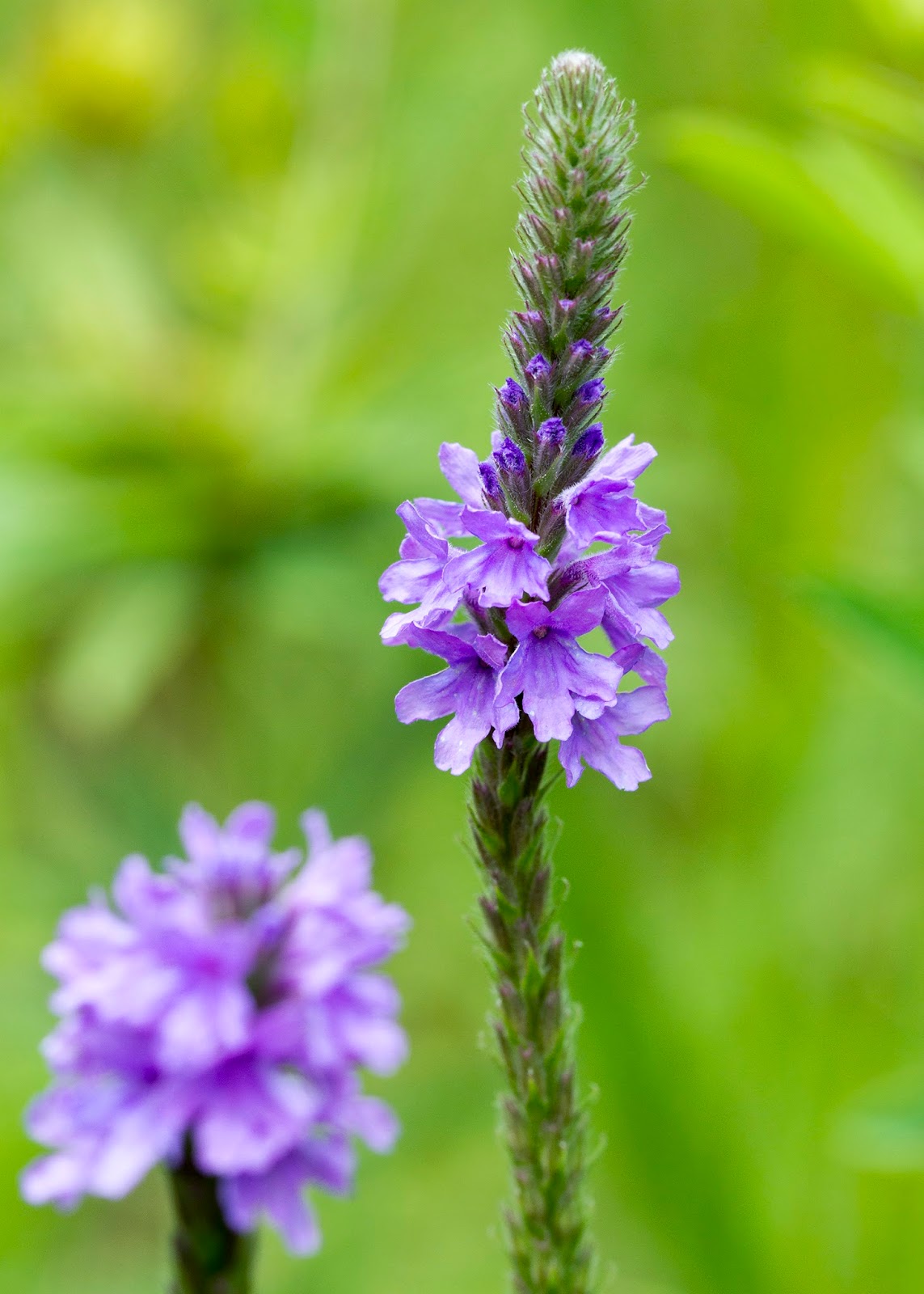
Whorled milkweed, Hoary Vervain and Prairie Tick-trefoil were still blooming. The latter two were past their peak. Having not been out in the right habitat this summer, the tick trefoil was the first I'd seen this year.

Prairie Tick-trefoil
Hoary Vervain
At the eastern edge of the prairie the Blue Grosbeak was easily detected.

Blue Grosbeak in challenging light (I could not get the colors correct!)
Proctacanthella cacopiliga robberflies were more numerous than any of large robberflies I've encountered before at Spring Green or really anywhere. At least 10-12 individuals easily flushed from the trail.

Proctacanthella cacopiliga with prey
Several were mating, including three engaged in an apparent ménage à trois. At first glance the three motionless flies had me thinking they were dead. I examined them more closely concluding they must be mating. But they remained so lifeless I went back to thinking they were dead and wondering what could have caused their demise. However, upon motioning toward them with a stick, I was startled by their explosive buzzing departure. I witnessed further equally explosive behavior by this species. I observed a male aggressively knock an in-flight female to the ground to copulate. It struck me as being a rather violent way to mate. Enter Jane's Addiction's Ted, Just Admit It as the soundtrack for this part of my walk..."Sex is violent..."

Robberfly ménage à trois, Who knew?
Five o'clock must have been the insect mating hour. The Punctured Tiger Beetles were also engaged in making connections too!

Mating Punctured Tiger Beetles
I did not anticipate being out in the prairie so late in the day. But five and a half hours later, there I was and so were the blooming Prairie Fame-flowers, a mystical succulent-appearing plant known for exhibiting its bloom in the last few hours of the day.


Each bloom lasts just for one day...And that was the tune I had in my head as I headed home from another glorious day in the desert prairie..."we can be heroes, just for one day..."

Prairie Fame-flower

Thursday, July 7, 2016

Ghosts Delivered

Ghost Tiger Beetle it is. A state special concern species.

Ghost Tiger Beetle, Quincy Bluff and Wetlands, 6July2016 
I was alerted this species was being seen in great numbers in Portage County and decided to venture to Quincy Bluff and Wetlands State Natural Area in Adams County in search of Ghosts and any other tiger beetles and robberflies I could find.
Quincy Bluff and Wetlands
The habitat and landscape of Quincy Bluffs is quite amazing. It's potential for spectacularity spoke to me from my first visit. The Department of Natural Resources site reports Northern Barrens Tiger Beetle occurring at this site. However I have yet to find one at this preserve. The DNR map for Ghost Tiger Beetle doesn't show this species being documented in Adams County. Not surprising considering I doubt few go looking for this cryptic insect. It makes sense though with how sandy Adams county is that this and other tiger beetles would occur there.

I was actually thinking I would find the Ghosts at a nearby abandoned cranberry farm. I searched that area before heading to Quincy. However the sands of the cranberry farm were disappointingly, void of insects with only a few Big Sand Tiger Beetles spotted. After about a half hour of searching I moved on to exploring several areas in the vast landscape encompassed by the Quincy Bluffs and Wetlands. My hopes of Ghosts had plummeted after my failure at the cranberry "desert." Not terribly disappointed, I turned my focus to observing other critters and plants.

Edward's Hairstreak, Quincy Bluff and Wetlands, 6July2016 
American Copper, Quincy Bluff and Wetlands, 6July2016 
Flower Longhorn Beetle, Quincy Bluff and Wetlands, 6July2016 
I added Punctured and Festive Tiger Beetle to my trip list along with various robberflies and dragonflies (I'll save the flies for another post).

Festive Tiger Beetle, Quincy Bluff and Wetlands, 6July2016 

Festive Tiger Beetle, Quincy Bluff and Wetlands, 6July2016 
The day was rapidly getting away from me as often happens while exploring nature. The sweltering heat was wearing on my endurance. Though still early in July, I wanted to check the west side of the preserve for Prairie Fame-flower before I headed home. I mapped the route to my destination. While doing so I spotted a promising sand blow on my satellite map. Since it was nearby, I decided to make one last effort to find another tiger beetle species for the day despite feeling rather exhausted.

The sand blow
I made the half-mile hike to the sand blow realizing as I walked the path that I had visited this area last year. The scent of Common Milkweed was intoxicating along the passage across the wetlands to the sand blow.

Common Milkweed
Arriving at the sand blow, I found the area teeming with sand wasps of various species. Several times, the smaller sand wasps fooled me into thinking I had finally discovered a Ghost Tiger Beetle. Within a few minutes though, I spotted what certainly had to be a pale tiger beetle. I binoculared the suspect and sure enough my persistence paid off, Ghost Tiger Beetle indeed! This elusive species was finally in my sight! I spotted another, chased around for photos, but was quickly was distracted by what I presume was a rather large, strangely pale, round-bodied wolf spider hunting out of its burrow. I did not notice the burrow at first. The spider was out in plain sight, large and lovely, in hot pursuit of some wasp. I clumsily approached it not realizing it had its escape hole nearby. In lightning speed it disappeared and seemingly so had the Ghosts when I turned my attention back to them.

Intriguing spider...I marked his hole for my return

Not to worry. A walk across the sand yielded 1-2 more Ghost Tiger Beetles. I was hoping to find more, but it was late in the day, nearing 7 p.m. and activity on the sand was dying down. I also realized as I stalked these Ghosts, they too were disappearing, presumably into their burrows for the eve.

Ghost Tiger Beetle, Quincy Bluff and Wetlands, 6July2016 

Despite only finding a handful of Ghost Tiger Beetles, I was utterly pleased nonetheless. My tired, shaky hands didn't get the sharpest photos, but I'm still quite happy with this life sighting.

Not the sharpest back view of the Ghost

Perhaps an early morning return visit will yield more beetles and more opportunity to study and photograph these fascinating creatures...and yes I made it to the Prairie Fame-flower area, but could not spy any of these beauties yet in bloom.

Friday, July 1, 2016

Tiger Beetle Tally 2016

In the past year or so, the Sauk-Prairie Canoe Launch near Sauk City, Sauk County has become a popular destination for tiger beetle nerds.


Historically I had associated this location with good shorebirding at certain times of the year. One of my firsts visits to this site was in August 2014 when I chased this Red Knot found by Jim Schwarz.


It was during that early August visit in 2014 that I noticed the dry sandscape leading to the river held various tiger beetle species that were taking flight along the path in front of me. The wet sand beach had tiger beetles as well. I recall Festive, Big Sand and Bronzed being present that day.

Big Sand Tiger Beetle, Nikon 1 V3, 70-300mm, 27June2016
Subsequent visits yielded impressive numbers of Bronzed Tiger Beetles and robberflies too (of course)!

Efferia albibarbis (male), Sauk-Prairie launch, 27June2016

Efferia albibarbis (female) with prey, Sauk-Prairie launch, 27June2016
I've been told eight tiger beetle species have been recorded at the Sauk-Prairie Canoe Launch in recent years.

Sandy Stream Tiger Beetle, Sauk-Prairie launch, 27June2016
Peck's Landing, near Spring Green also seems to be a good candidate for sandbar associated tiger beetle species. I visited this canoe launch earlier this spring and found several Bronzed and a probable Hairy-necked roaming the flats.

Bronzed Tiger Beetles humping, Peck's Landing, Sauk Co, 2June2016
I suspect a return visit could also yield Sandy Stream. This particular location lacks the dry sand blow habitat of the Sauk-Prairie Canoe launch. Therefore tiger beetle diversity isn't quite as impressive. However, with Spring Green Prairie State Natural Area, the seemingly pinnacle location for Wisconsin tiger beetles, just a few miles north up the road, one could round out her tiger beetle species list for the area by a visit to the prairie.

Earlier this week (June 27), I made my first voyage of 2016 to the Sauk-Prairie Canoe Launch. I finally found and photographed Hairy-necked Tiger Beetles. To my frustration, I failed to find this species in the past despite reports by others of them being in this area.

Hairy-necked Tiger Beetle, Sauk-Prairie Canoe Launch, 27June2016 
This particular tiger beetle outing yielded 5 tiger beetle species: Sandy Stream, Bronzed, Hairy-necked, Big Sand and a single Punctured near the parking lot.

Punctured Tiger Beetle, Sauk-Prairie Launch, 27June2016

 It's been a good summer for finding a nice variety of tiger beetle species here in Wisconsin.

Northern Barrens Tiger Beetle, Dunbar Barrens, 12June2016

In early June, my breeding bird surveys took me to Marinette County where I found two additional life tiger beetles, Northern Barrens Tiger Beetles and Boreal Long-lipped, at Dunbar Barrens State Natural Area. After failed searches for Northern Barrens in Adams County, I was surprised how easy this species was to locate at the Dunbar Barrens.

Boreal Long-lipped Tiger Beetle, Dunbar Barrens, 12June2016

Northern Barrens Tiger Beetle, Dunbar Barrens, 12June2016

As of this posting, Common Claybank, Ghost and Twelve-spotted Tiger Beetles are the three remaining species I have yet to see in Wisconsin. I'll be quite lucky to even find just one of these the remainder of this year!