Tuesday, September 13, 2016

September at the Lake

September hails my favorite season, fall. The season of senescence. The most poignant season of the four.


Witnessing nature's beauty in the north woods over Labor Day weekend ranks above any other holiday of the year.

September sees Lake Superior as its warmest and most inviting. The Big Lake. Comforting. Meditative. Home.

The mornings at Pike Lake (Luce Co, MI) were mostly socked in with fog. Still. Beautiful. Often giving way to blustery winds later in the day.


The fog decorated nature's bounty in dew.


As if Nature had wept for the loss of summer during the quiet moments of daybreak...


Webs woven in dew...


Like endless tears...


Repeating, contemplative reflections...


With the rising sun, the breath of Nature began erasing any trace of her morning's lament.


The loon that failed to breed this year, is it capable of flight? Finally free of  the fishing line that had been confining its wings? Ignorance and irresponsibility of humans wreaks havoc on nature's finest. It's been too many years without young.


Maybe next year...


Friday, September 9, 2016

Picture perfect

Late August through September appears to be prime time to find Splendid Tiger Beetles atop the bluffs at Spring Green Preserve. Last fall marked the first time I had observed this species. I missed them during their spring flight, so had been looking forward to returning to feast my eyes on my favorite and the most colorful of Wisconsin's tiger beetles. 

Splendid Tiger Beetle

Alex Harman had found Common Claybank Tiger Beetles atop the bluffs both this spring and earlier this month co-mingling with the Splendids. I was hopeful my venture to the bluffs of Spring Green would yield this would-be life tiger beetle. I was not disappointed. 

Common Claybank Tiger Beetle
I arrived at Spring Green Preserve shortly after 9 a.m. with the intention to ascend the bluff trail as quickly as possibly. I acknowledged the challenge of accomplishing such a task given the likely enticing distractions that would present themselves along the way. Fortunately insect activity was minimal which made my objective far easier. The prairie was saturated with moisture from recent rains. The temperature hovered around a pleasant seventy degrees fahrenheit. The prairie was just emerging from being socked in by fog. I scattered the occasional grasshopper, but far fewer than I normally encounter on a late day outing. Eventually I stirred the intermittent Punctured Tiger Beetle. With the relatively cooler temperatures, their flights seemed more like a sluggish stupor than their typical explosive rapid escape. Like Superman deficient in kryptonite, these creatures needed sun and warmth to energize. Though I vowed not to delay with an attempt at photographing Punctured Tiger Beetles, I could not resist the one trapped in a veritable "rabbit hole."


Shortly after I began my ascent up the wooded backside of the bluff,  I discovered leaving the mosquito repellent behind was a colossal error. Foolishly I assumed biting insects would not be an issue in September. WRONG. The recent rains had clearly provided the substrate for a nice hatch of mosquitoes. I succumbed to being the sole blood meal for the swarm that awaited me. Defending myself against the mosquitoes and weathering the high humidity made the trek up the bluff feel more laborious than other recent climbs this summer. Upon reaching the top, I felt exhausted and a bit defeated. I was not feeling "it." Would I get skunked on my tiger beetle quest? Hell no. Just as I was catching my breath and righting my attitude, out of the corner of my eye I spotted a beetle along the rocky trail. Common Claybank! 

Common Claybank Tiger Beetle
Common Claybank Tiger Beetle, in situ


And further up the trail Splendid! 

Splendid Tiger Beetle
My adrenaline kicked in and suddenly I was ready to traverse the ridge top to the old quarry. But not before I relished in the spectacular presence of the 14-16 Splendid Tiger Beetles scurrying around with the less numerous (all of two), but cooperative and sexier than ever Common Claybank Beetles. 

Scratching that itch, Common Claybank Tiger Beetle
Common Claybank Tiger Beetle strikes another pose

The sun emerged from the fog in perfect time to accentuate the intricate colors of these two species. 

Common Claybank Tiger Beetle

The numerous Splendids provided great opportunity to study the variations in maculations of this species. 

Splendid Tiger Beetle
After about an hour's time, the noon tornado sirens were ringing below in the town of Spring Green prompting me to make my way to the old quarry and western bluff of Spring Green Preserve East. I was in search of the Spiranthes magnicamporum, Great Plains Lady's Tresses orchid. Not a rare orchid, but this is the only place I've seen this species. I make it an annual trip to come back and visit this bloom that I first discovered a few years ago. The plant was not quite in peak fluorescence, but beautiful to behold nonetheless. 

Great Plains Lady's Tresses orchid
Once again I scoured the rocky terrain of the old quarry for signs of reptiles or tiger beetles. Not a one. 

Shadow art
By now the sun was heating up the landscape and I was low on water. It was time to make my way back down the bluff.  Along the wooded trail I encountered the fourth tiger beetle species of the trip, Six-spotted. This species is most typically seen in May/June. I am told a few can be seen in late summer/fall. This year seems to be a bit better than most for late season sightings of this species.

Six-spotted Tiger Beetle
It was well into the afternoon when I finally emerged back on the desert prairie trail. The sun was blazing and temperatures had climbed into the uncomfortable 80s. Insect activity was strikingly much more abundant than during my cool morning hike. Festive Tiger Beetles (species number five for the trip) were flushing with great frequency. I estimated at least 15-20 individuals.  

It must have been race time because I encountered a larger racerunner bolting by me on the trail. When I rounded the bend in the traditional racerunner sand blow, I flushed at least five more Six-lined racerunners!
Six-lined Racerunner next to acorn cap for size reference

The sixth tiger beetle species of the trip, Big Sand, was also seen in this sand blow. I found one attacking prey and was sure this would afford an easy opportunity for a photo. Alas it did not and I was too weary, several hours into my desert trip, to maintain the patience to get a photo. 

I noticed during my morning and afternoon hike through the prairie that there seemed to be a decent flight of Eastern Tailed-Blues. In general, butterfly diversity seemed fairly good as far as my novice eyes could surmise. Additional species I encountered in singles to a few included Clouded Sulphur, Common Buckeye, Eastern Tiger Swallowtail, Comma species, American Copper, Silver-spotted Skipper, Monarch and what I believe is a Leonard's Skipper. 
Leonard's Skipper?
American Copper
To my surprise, I encountered two more Splendid Tiger Beetles along the prairie trail, far below their traditional rocky bluff habitat. One had more pronounced maculations than I have observed on this species.

Splendid Tiger Beetle with more pronounced maculations

More than five hours had past as I reached the conclusion of one of my most memorable adventures to Spring Green Preserve. 

Spring Green Preserve, east
The beetles were divinely picture perfect, yielding to my camera unlike before. And the Six-lined Racerunners, I was downright feeling giddy and spoiled by nature by time my eyes feasted on number three, four, five and six of this species! Nature had once again brought me joy unmatched by anything else. This was DEFINITELY what this girl was in need of. 

Rough Blazing Star


Monday, September 5, 2016

Ruby-throats in the Yard

And just like that, summer is over. I spent it immersed in ruby-throated hummingbird banding. Several of my weekends I headed north to Rusk and Washburn counties in northwestern Wisconsin where I power banded 2-3 days, banding 3-4 hours a stretch in the mornings and early evenings, Friday night through Sunday morning. When I wasn't banding I was replenishing my band supply, hand-snipping and forming each band. 

From mid-June to late August, I banded over 800 ruby-throated hummingbirds in Wisconsin (mostly) and Michigan! 
Ruby-throated Hummingbird, HY male on Royal Catchfly
The hummingbird banding season is now winding down. During the past week, I've finally had the chance to admire the few ruby-throats residing in my own backyard. Fall migration is upon us. Outside of my own backyard I've not witnessed much of it, which is entirely fine by me (finally shedding my birder identity?).

Ruby-throated Hummingbird, HY (hatch year) male patrolling his territory
I've found the hatch year (HY) ruby-throats to be more confiding and curious than the adults. Capturing images of the young hummingbirds is fairly easy compared to the wary adults. I still have an adult male visiting my yard inconsistently, but his visits are brief and rarely involve nectaring at my flowers. He has not been cooperative for photos. It has been my challenge to capture a decent image of an adult male ruby-throated hummingbird. Perhaps one of these years.

HY Ruby-throated Humming visiting Red Alert Phygelius hybrid
Ruby-throated Hummingbird, HY male visiting  Red Alert Phygelius hybrid
Last November I was gifted some Royal Catchfly plants by the hosts of the first rufous hummingbird I banded in Wisconsin. Up until a two weeks ago, I had written off the plants as not having survived being planted so late in the season in last year. To my delight I discovered all three plants hidden and blooming among some of my other perennials that were crowding out this favored hummingbird plant. The hummingbirds immediately took to the blooms upon my day-lighting them.
Ruby-throated Hummingbird HY male at Royal Catchfly

While patiently staking out my hummingbird plants for photos of nectaring hummingbirds, this Cape May Warbler paid a visit. My first fall migrant of the season! Despite having a small urban backyard, migrating Cape May warblers seem to be a regular visitor annually. 
Cape May Warbler
Cape May Warbler
Black and Blue Salvia is another top tier favorite plant for the hummingbirds and their host gardeners.


This Dropmore Scarlet Honeysuckle is a recent addition to my garden. I picked it up at the impressive Northern Exposure Greenhouse and Garden Center in Boulder Junction en route home from hummingbird banding a few weekends ago. It was an instant hit with the hatch year ruby-throats.


They had not been visiting my lantana flowers until I moved the plant from the ground to a stand four feet off the ground. By simply elevating this potted plant, the hummers began visiting it regularly.


Certain Mondarda species such as this Wendy's Wish serve as magnets for nectaring hummingbirds. Unfortunately the native species that grows in Wisconsin's prairies is not a flower the hummingbirds will frequent.
Wendy's Wish Monarda species
By month's end, my resident Ruby-throated hummingbirds will depart for their wintering grounds in Central America. It's been a whirlwind but fun season despite the little time I've had in my yard to enjoy them. I hope to capture some more moments with these delightful creatures before they leave.

King of the planter!
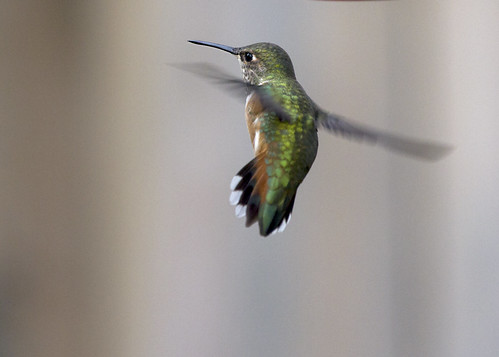
Their departure will usher in the exciting season of "winter hummingbirds" when rufous and Anna's hummingbirds migrate through Wisconsin. Fall is also the time for vagrant hummingbirds to appear! Will this year yield another Mexican violetear (formerly known as the green violetear) or perhaps a first record blue-throated hummingbird for Wisconsin? I'll be keeping my feeders cleaned and filled and the yard littered with red magnets in hopes of attracting one of Wisconsin's rare hummingbirds! It was not too long ago, October of 2014, that I was fortunate to attract this female rufous hummingbird to my yard. The way time is moving and circumstances have changed, that seems like a life time ago... I'm looking forward to what the future and changing seasons will bring!

Flight shot showing the diagnostic R2 for female Rufous
Rufous Hummingbird, female, my yard October 2014

Sunday, August 14, 2016

Spring Green Preserve 7August2016

It's been one week since I visited Spring Green Preserve. The task of photo editing has fallen to the wayside... BUT I resolve not to allow another series of photos lay to waste in the digital darkness of my home drive!

Monarda punctata
Spring Green Preserve, I had not been there all of July. It was time to visit. I was badly in need of a good cardio workout climbing to the top of the bluff not to mention there are always some interesting critters and plants to see along the way. I also figured I had a shot at seeing a Blue Grosbeak since they've been reported breeding here this summer. So I packed my carryout lunch from the Spring Green General Store and was off. My plan was lunch at the top.

Three to four hours later, beyond the robberflies, Punctured Tiger Beetles and Blue Grosbeak, I finally reached the top of the bluff where I ate a very late lunch. That's just how it goes when you visit this place. There's lots of the whimsical distractions to investigate en route to the bluff top.

The desert was predominantly blooming with Monarda punctata (aka. Spotted beebalm, Spotted horsemint) and what I believe was False Sunflower. It's hard to feel compelled to photograph flowers that are my least favorite color, yellow. Thus I can't be certain of ID since I didn't investigate these banal yellow plants.

Monarda punctata
On the insect front, Punctured Tiger Beetles (Cicindela punctulata) were numerous along the entire prairie trail. Punctata and Punctulata...my brain paired these similar terms wondering if the "Puncs" often peak together.

Punctured Tiger Beetle (Cicindela punctulata)

Eastern Tailed-blues were also present.

Eastern Tailed-blue (female) Butterfly
A jumping spider made an appearance too.


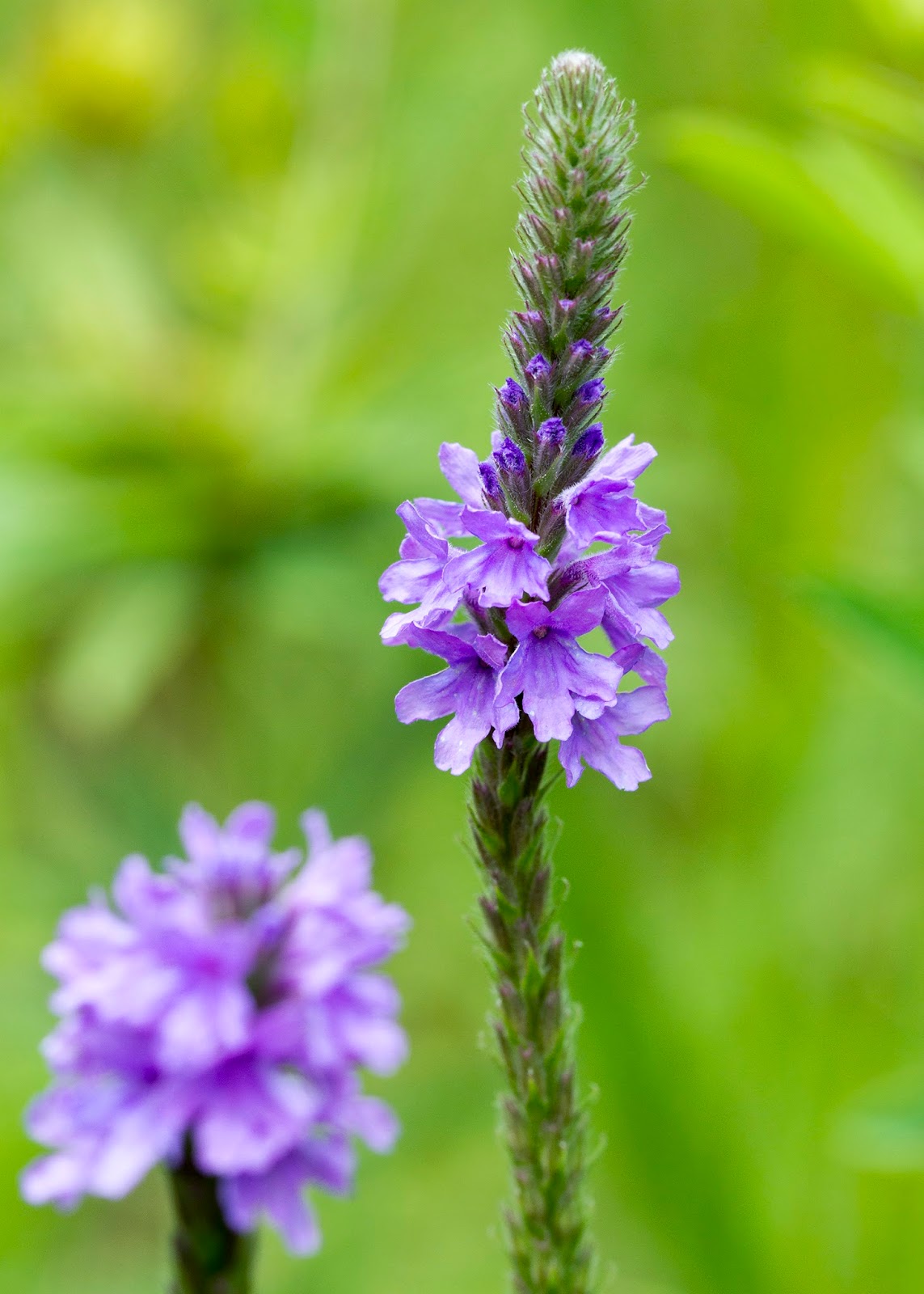
Whorled milkweed, Hoary Vervain and Prairie Tick-trefoil were still blooming. The latter two were past their peak. Having not been out in the right habitat this summer, the tick trefoil was the first I'd seen this year.

Prairie Tick-trefoil
Hoary Vervain
At the eastern edge of the prairie the Blue Grosbeak was easily detected.

Blue Grosbeak in challenging light (I could not get the colors correct!)
Proctacanthella cacopiliga robberflies were more numerous than any of large robberflies I've encountered before at Spring Green or really anywhere. At least 10-12 individuals easily flushed from the trail.

Proctacanthella cacopiliga with prey
Several were mating, including three engaged in an apparent ménage à trois. At first glance the three motionless flies had me thinking they were dead. I examined them more closely concluding they must be mating. But they remained so lifeless I went back to thinking they were dead and wondering what could have caused their demise. However, upon motioning toward them with a stick, I was startled by their explosive buzzing departure. I witnessed further equally explosive behavior by this species. I observed a male aggressively knock an in-flight female to the ground to copulate. It struck me as being a rather violent way to mate. Enter Jane's Addiction's Ted, Just Admit It as the soundtrack for this part of my walk..."Sex is violent..."

Robberfly ménage à trois, Who knew?
Five o'clock must have been the insect mating hour. The Punctured Tiger Beetles were also engaged in making connections too!

Mating Punctured Tiger Beetles
I did not anticipate being out in the prairie so late in the day. But five and a half hours later, there I was and so were the blooming Prairie Fame-flowers, a mystical succulent-appearing plant known for exhibiting its bloom in the last few hours of the day.


Each bloom lasts just for one day...And that was the tune I had in my head as I headed home from another glorious day in the desert prairie..."we can be heroes, just for one day..."

Prairie Fame-flower